


One Visitor Standard for All PepsiCo Sites.
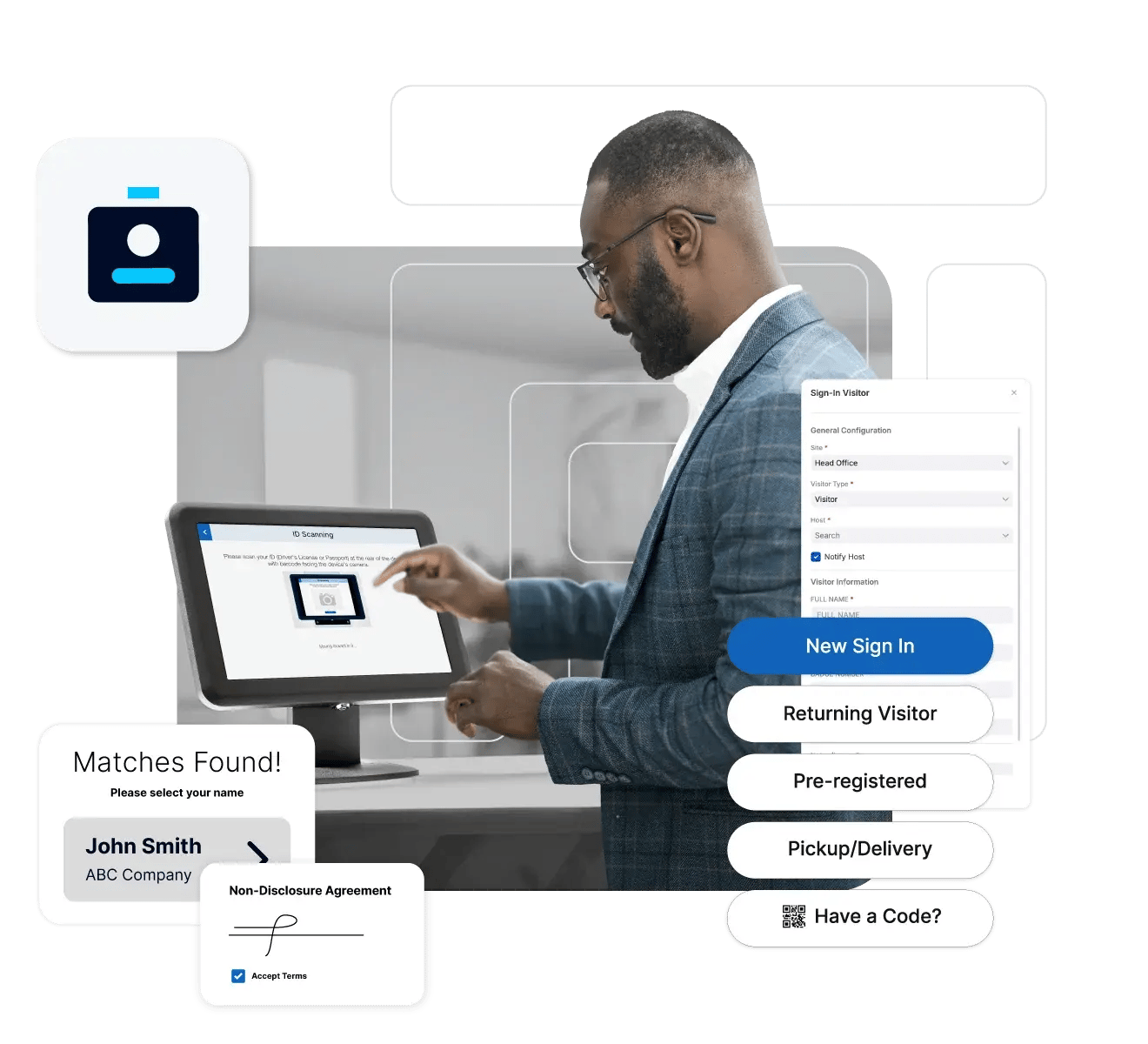
Building on existing VisitorOS adoption at 350+ PepsiCo sites, FacilityOS delivers a single system of record that establishes enterprise-wide consistency, visibility, and governance across all facilities.


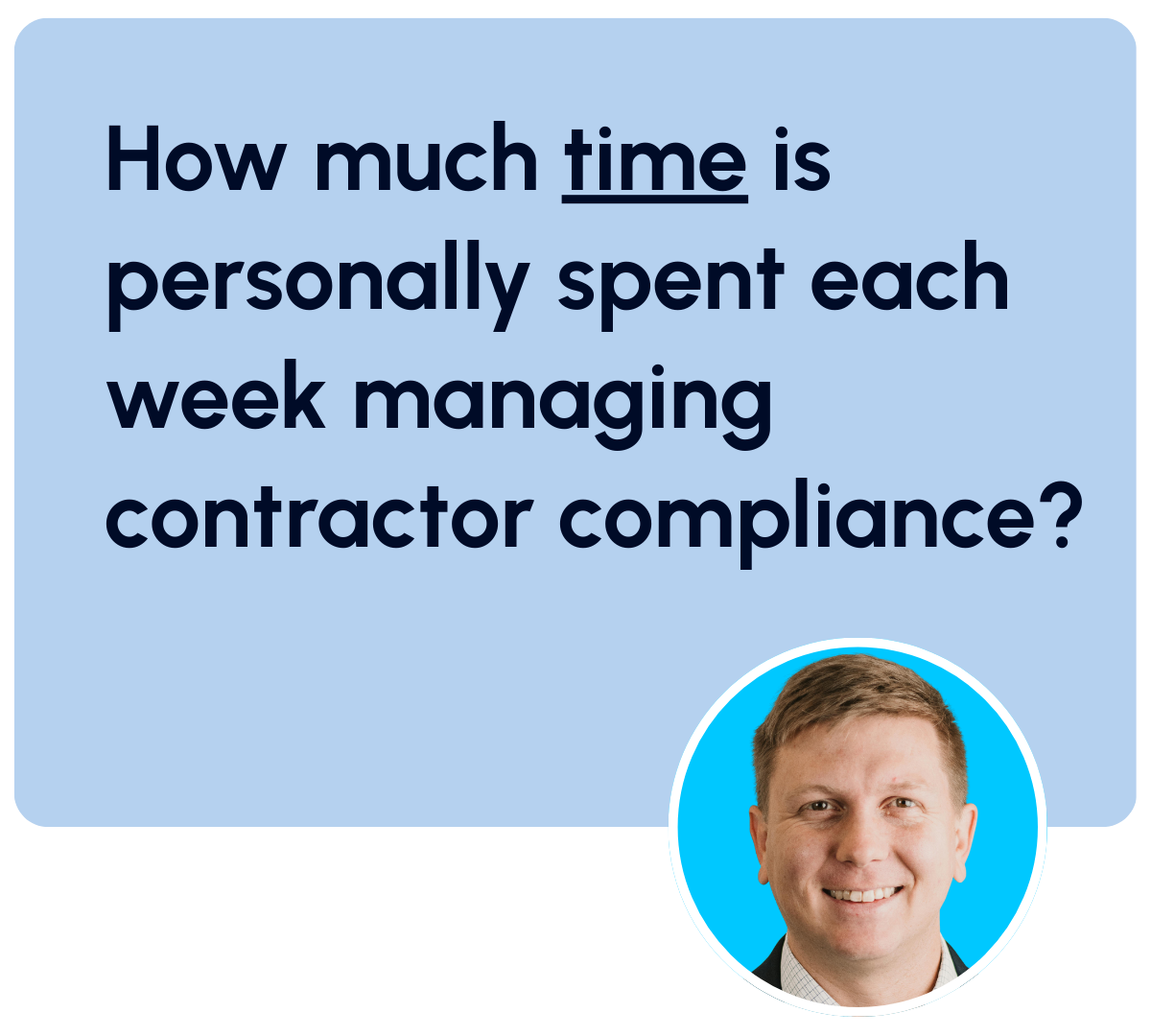
Not every organization is in the same position. The distribution shows just how wide that range is:
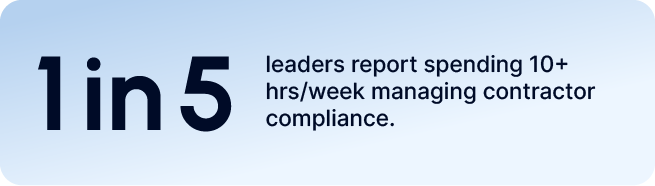
- 31% spend 1-3 hrs/week
- 24% spend 7-10 hrs/week
- 20% spend more than 10 hrs/week
The weekly time cost varies widely across organizations. For a significant portion, contractor compliance absorbs the equivalent of a near-full-time workload each week.


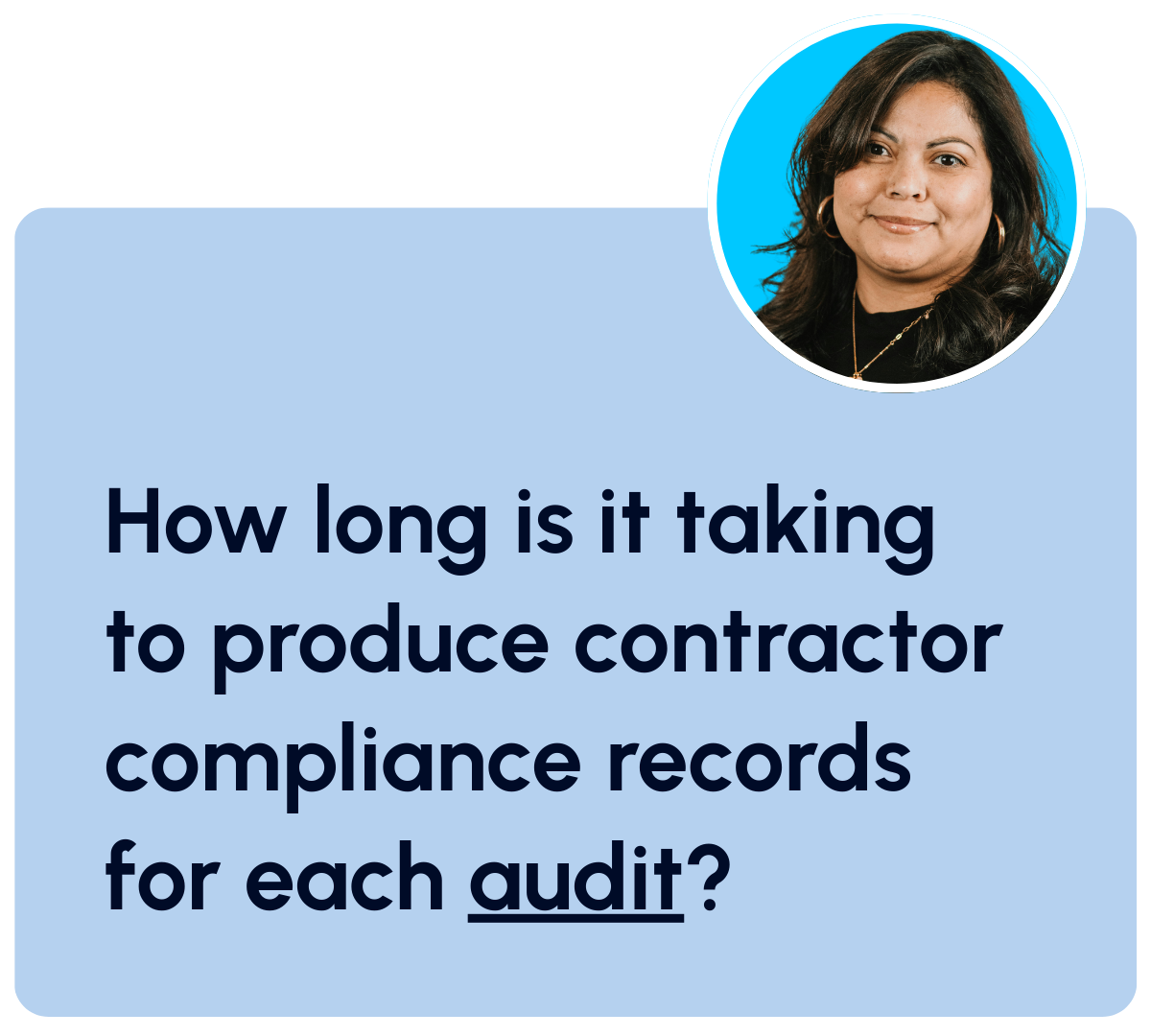
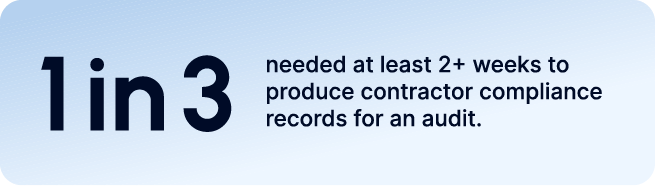
Most organizations are not close to audit-ready on demand. Here's where the majority actually land:
| 1 in 3need 2+ weeks | 15%need 1-2 weeks |
| 33%need <1 week | 15%need >1 month |
| 14%need <1 day | 14%need <1 hour |
Organizations spending the most hours on weekly compliance management are also the ones absorbing the longest audit documentation cycles, compounding the time taken away from other work.

Rising documentation pressure on organizations already stretched thin on contractor compliance management time is often what leads to the project delays and audit failures that follow.
For some, that pressure has already shown up in operations and audit outcomes.


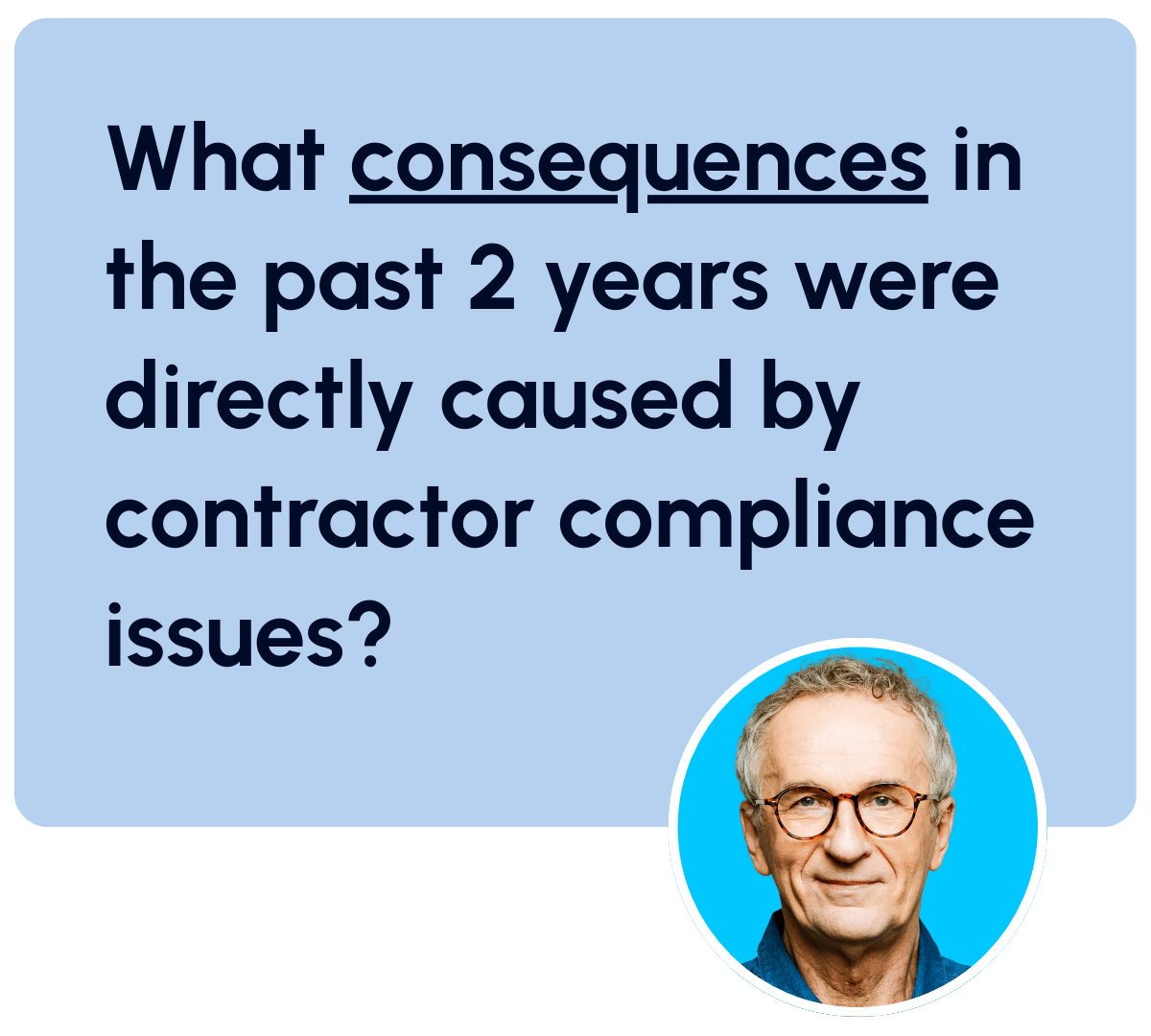
64% Respondents Experienced Consequences in the Past 2 Years Directly Due to Contractor Compliance Issues
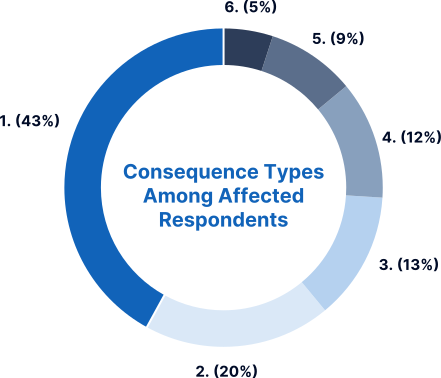
Most reported operational consequences:
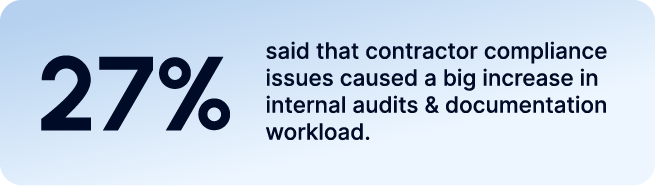
- Increased reporting and documentation workload (42%)
- Project delays or work stoppages (19%)
- Failed or delayed audits or inspections (13%)
- Safety Incidents involving contractors (12%)
- Legal claims or increased insurance scrutiny (9%)
- Regulatory fines, citations, or warnings (5%)
What Organizations Can Do About It
Get Contractor Compliance Records Out of Spreadsheets, Shared Drives, & Email
When compliance documentation lives across spreadsheets, shared drives, and email threads, every update takes longer and every audit starts with a scavenger hunt. A single source of truth for contractor records reduces the time spent locating, verifying, and updating documentation.
Track Expiration Dates Before They Become a Problem Later
Most contractor documents have expiration dates. Licenses, certifications, and insurance policies all lapse on their own timeline, and when one expires without notice, the consequences range from work delays to liability exposure. Automated expiration tracking and alerts keep teams ahead of renewal deadlines instead of chasing down expired documents after a contractor is already onsite.
Use Automation to Keep Documentation Accurate, Current, & Audit-Ready
Half of respondents need a week or more to produce contractor compliance records for an audit. When documentation is monitored and maintained in real time, teams can pull what they need in minutes instead of weeks, and audits stop being a scramble.
Manage Contractor Compliance Tasks From One Place with Clear Visibility
Reviewing, approving, and managing document submissions from vendors and contractors takes time, especially when the process is spread across tools and inboxes. A central hub with clear status visibility makes it faster to see what needs attention and act on it.
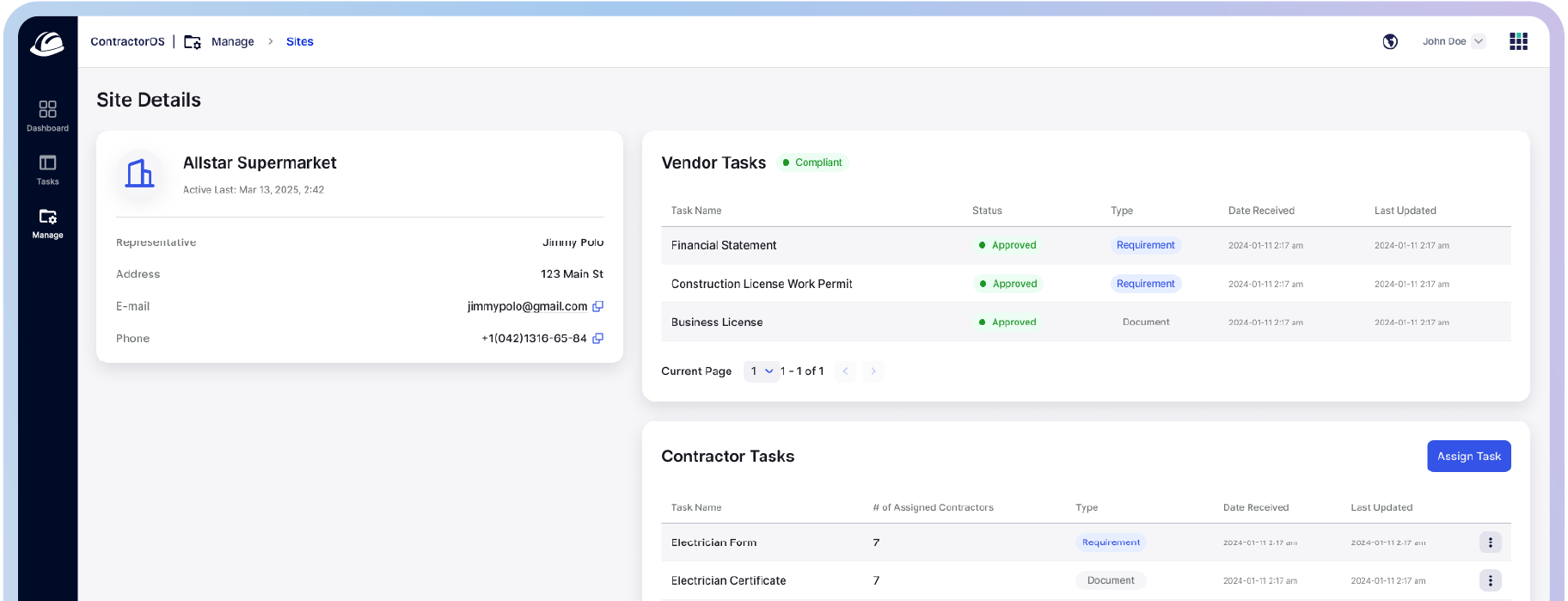
This is what ContractorOS was built to do
Experience the Smarter Way to Manage Contractor Compliance
ContractorOS simplifies contractor and vendor compliance management with a centralized, automated solution. By consolidating documents, automating expiration reminders, and providing robust audit trails, it ensures all requirements are met seamlessly.

Inconsistent Screening Standards Across Sites
Some sites run on FacilityOS with standardized visitor and contractor screening, while others still operate independently, creating uneven enforcement, compliance gaps, and security exposure.
The question leadership will be asked is:
“Why is this controlled in some buildings, but not all of them?”
Blind Spots Outside the FacilityOS Network
Sites not yet on FacilityOS carry compliance risk that remains invisible at the site level. These often surface only during audits, incidents, or investigations.
The follow-up question:
“Was this an isolated gap or just the first one we found?”
Partial Standardization Drives Overspend
While FacilityOS consolidates vendors and tools at some locations, other sites continue to purchase their own systems, resulting in overlapping contracts, missed enterprise pricing, and limited budget control.
The finance team asks:
“How did we end up paying different prices for the same capability?”
Legacy Systems Become Permanent
Each year a site remains outside the FacilityOS ecosystem, the harder and more expensive it becomes to bring it in.
The hindsight question:
“Why didn’t we extend what was already working?”

[FacilityOS] was easy to roll out and easy to manage. We rolled out 90 locations quickly in about 3 months with the help of [FacilityOS]'s support team.
– Jeff O.

Today, PepsiCo operates with two very different levels of control.
Standardization is how you close that gap.
PepsiCo today With Some Sites Using VisitorOS
1. Standards aren’t fully consistent: Some sites use standardized visitor and contractor screening; others operate independently.
2. Visibility is partial: Central teams see activity in VisitorOS sites, with limited insight elsewhere.
3. Value lives at the site level: Successful outcomes exist, but aren’t consistently used to inform expansion decisions.
4. Tooling varies by site and function: Overlapping tools persist outside standardized locations.
5. AI insights are site-specific: Sites using VisitorOS can analyze trends locally, but insights don’t roll up across the portfolio.
PepsiCo with Enterprise-Wide VisitorOS
1. One consistent enterprise standard: Screening is applied uniformly across all sites, with controlled local flexibility
2. Portfolio‑wide visibility: All sites roll up into a single, real‑time view for audits, risk, and performance.
3. Decisions driven by internal proof: Enterprise teams use site data to quantify ROI and risk reduction.
4. One system of record: EHS, Operations, Facility Managers, Security, and Finance teams align on a shared platform.
5. AI‑ready enterprise governance: Standardized data across sites enables portfolio-wide insights, prediction, and optimization.
Today, PepsiCo operates with two very different levels of control.
Standardization is how you close that gap.
PepsiCo Today with Some Sites Using VisitorOS
Here's what's currently happening:
- Standards aren’t fully consistent: Visitor and contractor screening is standardized at some sites, while others still operate independently.
- Visibility is partial: Central teams see activity in VisitorOS sites, with limited insight elsewhere.
- Value lives at the site level: Successful outcomes exist, but aren’t consistently used to inform expansion decisions.
- Tooling varies by site and function: Overlapping tools persist outside standardized locations.
- AI insights are site-specific: Sites using VisitorOS can analyze trends locally, but insights don’t roll up across the portfolio.
PepsiCo with Enterprise-Wide VisitorOS
Here's what you can expect:
- One consistent enterprise standard: Screening is applied uniformly across all sites, with controlled local flexibility.
- Portfolio-wide visibility: All sites roll up into a single, real-time view for audits, risk, and performance.
- Decisions driven by internal proof: Enterprise teams use site data to quantify ROI and risk reduction.
- One system of record: EHS, Operations, Facility Managers, Security, and Finance teams align on a shared platform.
- AI-ready enterprise governance: Standardized data across all sites enables portfolio-wide analysis, predictive insights, and continuous optimization.