Emergency Risk Assessment Template

An emergency plan is only as strong as the understanding behind it.

How to Conduct an Emergency Risk & Needs Assessment

An emergency plan is only as strong as the understanding behind it. This starts with a clear-eyed look at the risks your organization faces. A proper risk assessment does more than list potential hazards. It evaluates how each hazard could impact your people, assets, and operations, and gauges how prepared your organization is to face them.

Start by identifying hazards that are likely or possible in your region: hurricanes, tornadoes, wildfires, floods, ice storms, or earthquakes. 

This process surfaces hazards that demand the most attention and investment. It also creates a baseline for improvement, showing where better preparation could raise resilience.

Emergencies Can't Be Scheduled or Controlled. But You Can Be Prepared.
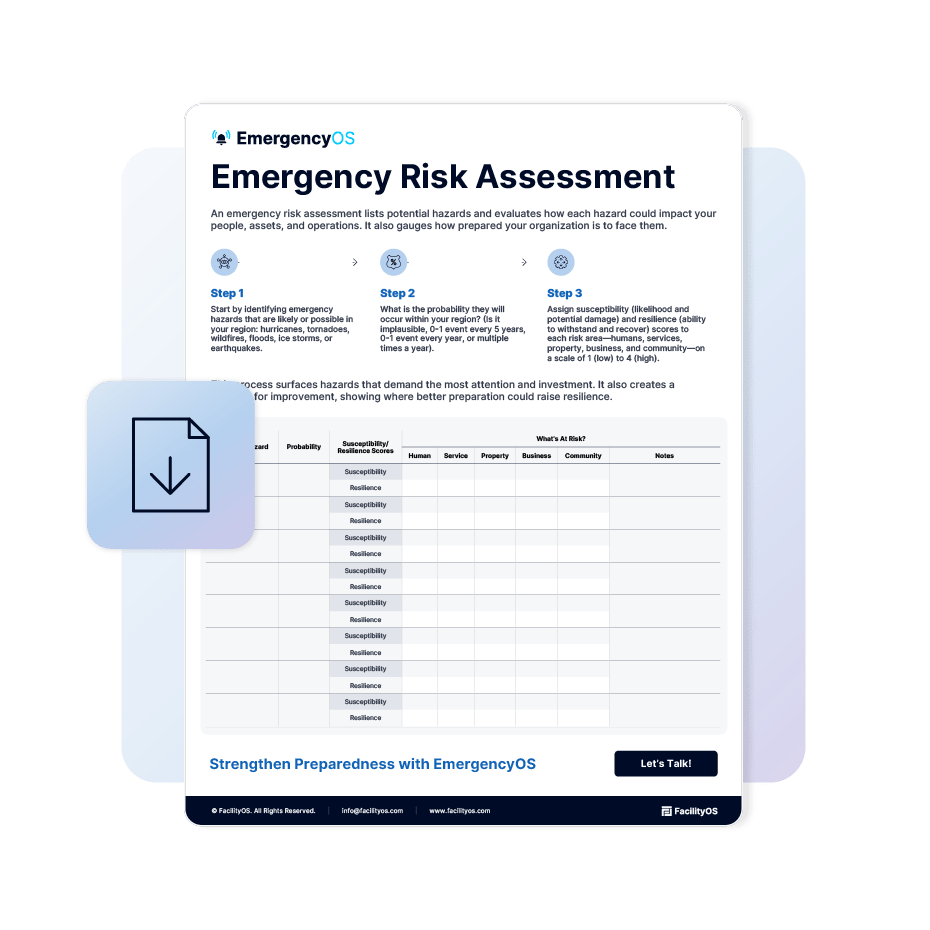
Emergency preparedness can build resilience in daily operations, but where do you start? By evaluating how each hazard could impact your site and gauges how prepared your organization is to face them. 

EmergencyManagementRiskAssessement-Hr-padded-1

Frequently Asked Questions

Where do I start with conducting an emergency risk assessment?

An emergency plan is only as strong as the understanding behind it. This starts with a clear-eyed look at the risks your organization faces.

Start by identifying hazards that are likely or possible in your region: hurricanes, tornadoes, wildfires, floods, ice storms, active shooters, fires, chemical spills, security incidents, earthquakes, etc. 


What do I do after I've filled out the emergency risk assessment template?

Once risks are identified, the next step is to understand what will be needed when those risks turn into real events. This is where a rapid assessment, or needs assessment, comes in.

A wildfire risk may call for ember-resistant vents, defensible landscaping, remote-triggered sprinkler systems, air quality monitoring, clear evacuation routes, and quick coordination with local fire services. A flood risk may require sandbags, elevated storage for sensitive equipment, and contingency plans for power outages. A snowstorm may involve power loss, impassable access roads, roof load, frozen pipes, staffing shortages.

This analysis translates risk awareness into actionable preparation.

How do I turn my risk needs into an actionable emergency preparedness plan?

The best way to strengthen your preparedness plan is to start with the key pillars. These include planning, training, drills, reporting, and communication. Each pillar of your emergency preparedness plan can be improved and optimized with the right processes and tools. 

1. Planning: Your risk and rapid assessments provide the foundation for emergency preparedness. Use them to build procedures tailored to each type of event. 

2. Training: Training prepares you to act decisively when unplanned weather events turn routine into chaos. The content and scope of the training should reflect the specific tools, systems, equipment, and standard operating procedures (SOPs) used at your facility, rather than being generic or one-size-fits-all. 

3. Exercises & Drills: Drills give everyone on site, from front-line staff to emergency coordinators, a chance to practice their roles and test the emergency event plan. Drills turn your emergency plans into muscle memory, so when a storm hits, everyone knows what to do.

4. Reporting: Good preparation is visible on paper. Many organizations now face internal mandates or regulatory audits around safety and emergency management. For example, OSHA’s Emergency Action Plan (EAP) requirements state that employers must maintain written procedures, conduct regular drills, and ensure all personnel, including employees, contractors, and visitors, know what to do. Having digital records in place avoids a last-minute scramble and provides proof of due diligence.

5. Communication: Even the best plan can fall apart without strong communication. In the chaos of an emergency, clear and reliable communication makes all the difference. This includes: mass communications, real-time mustering for roll calls, two-way communication tools, etc. In every type of emergency, time is precious. Faster, clearer communication saves lives.


More Emergency Preparedness Resources

Untitled design (4)

Emergency Readiness Checklist: Preparing for Natural Disasters

Explore five key actions to help strengthen site-level preparedness across planning, training, drills, and communication.
Pllaning-for-unplannable-hero

Emergency Preparedness for Weather Events & Natural Disasters

With a methodical approach organizations can give the best possible chance to weather the storm, whatever form it takes.

Navigating Safety & Compliance: Key Learnings From Manufacturers

OH&S Magazine Report: Navigating Safety & Compliance in Manufacturing

See insights from the survey report on the state of visitor and emergency management.

toolbox-for-tomorrow-res

On-Demand Webinar: Mastering EHS Excellence with Visitor & Emergency Management

Hosted by EHSToday with special guest Meghan Shambach, Senior EHS Manager at Acrow Bridge.
RPT_EmergencyManagementGuide

Complete Guide to Emergency Management

Discover comprehensive strategies & technologies to enhance emergency management at your facility.