Is Your Visitor Management Program CJIS Compliant?
Organizations handling Criminal Justice Information are held to strict visitor management standards. Learn what the CJIS Security Policy requires and how to keep your facility audit-ready.
For law enforcement agencies and organizations that handle Criminal Justice Information, the CJIS Security Policy outlines clear expectations around physical security and visitor management. Requirements cover how visitors are logged, how long those records are kept, who can access them, and how anomalies are identified and reported.
Staying compliant doesn't have to mean more manual work. The right visitor management tools can automate your record-keeping, protect personally identifiable information, and give you real-time visibility into who's accessing your facility so you're always prepared.
What You Need To Know
The CJIS Security Policy requirements are specific and actionable. Here's what applies to your organization:
-
Requirements apply broadly: CJIS Security Policy requirements apply to all law enforcement agencies and organizations handling Criminal Justice Information, with enforcement by audit.
-
Visitor logs must be maintained and reviewed regularly: Organizations are required to keep visitor records for at least one year, conduct quarterly reviews, and report any anomalies promptly.
-
Access to records must be carefully controlled: Only authorized personnel should be able to view visitor records, and the amount of Personally Identifiable Information collected should be kept to a minimum.
When these practices are embedded into your daily operations, staying compliant becomes a natural part of how your facility runs.

The Right Tools & Processes Makes It Manageable
Staying on top of CJIS visitor management requirements is much easier when your systems are doing the work for you. When logs are captured automatically, access is controlled by permissions, and reports are available on demand, quarterly reviews and audit preparation become a straightforward part of your routine.
How VisitorOS Helps You Stay Compliant
VisitorOS is purpose-built to help organizations meet the physical access and visitor management requirements of the CJIS Security Policy, fitting into your existing security workflow without adding complexity.
Automate Visitor Management
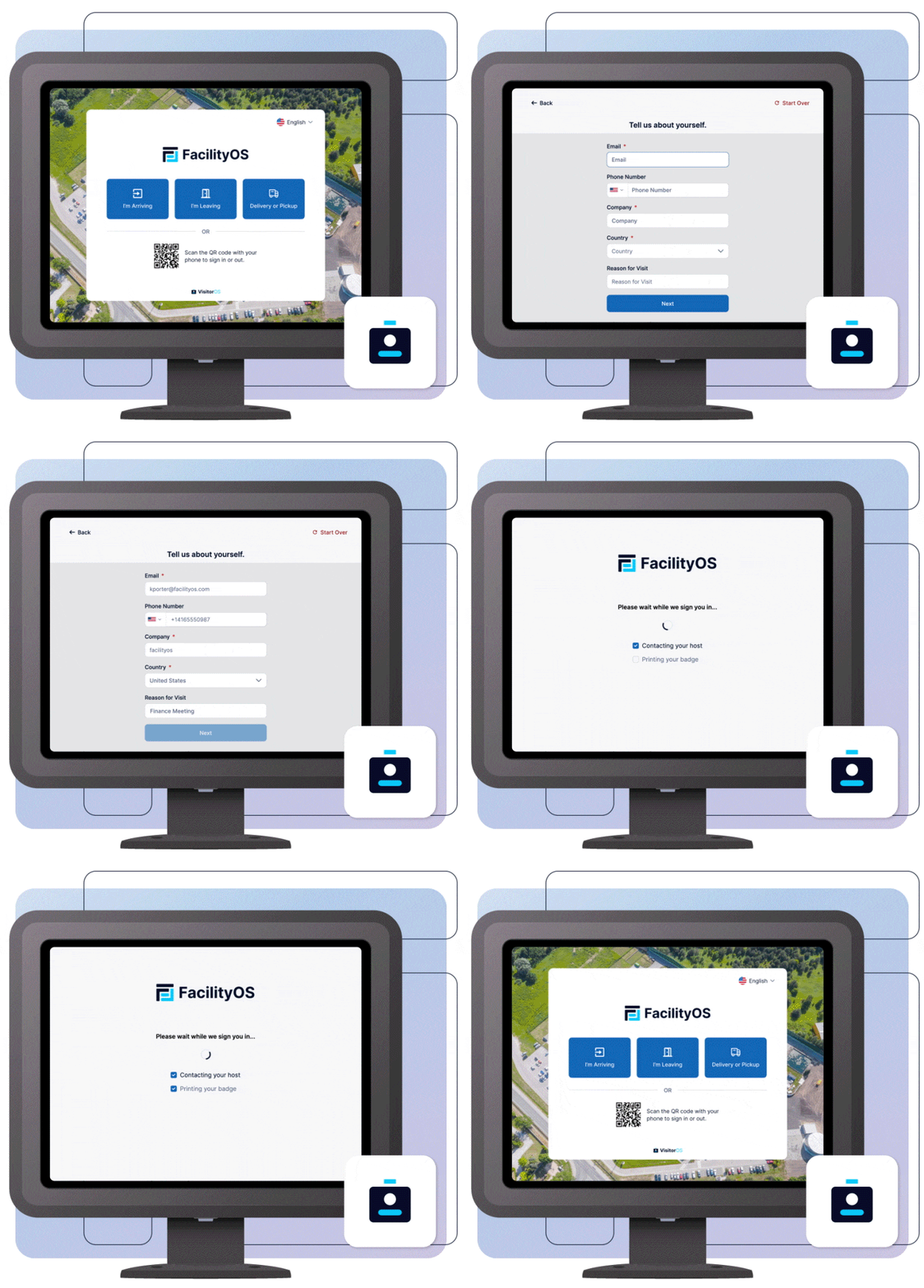
Streamline check-ins, capture required visitor data, and automatically generate secure, organized logs that meet CJIS retention requirements without the manual effort.
Analyze and Report in Real-Time
Stay on top of visitor activity with real-time dashboards that make it easy to spot anomalies, investigate irregularities, and move through quarterly reviews with confidence.
Protect Sensitive Information
Limit access to visitor records to authorized personnel only, with advanced user permissions that keep personally identifiable information secure and compliant.
Be Prepared for Audits
Generate comprehensive, automated reports at any time so your records are always organized, accurate, and ready whenever an audit requires them.
Frequently Asked Questions
What is the CJIS Security Policy and who does it apply to?
The CJIS Security Policy applies to every individual with access to, or who operates in support of, criminal justice services and information, including contractors, private entities, and noncriminal justice agency representatives. The scope is broader than many organizations realize. Courts, 911 dispatch centers, county IT departments, government contractors, and any vendor with unescorted physical access to a secure location must all comply.
What do the requirements mean for visitor management specifically?
The policy places clear expectations on physical access controls and record-keeping. Organizations are required to maintain visitor logs for at least one year, conduct quarterly reviews to identify and investigate anomalies, and ensure records are only accessible to authorized personnel. Visitor access to secure areas must be controlled, logged, and monitored, with sensitive areas designated as controlled zones where access is limited to authorized personnel only.
What are the consequences of non-compliance?
For a law enforcement agency, losing access to systems like the NCIC means officers cannot run criminal history checks in the field, which is a direct public safety risk. Beyond operational impact, non-compliance can also result in reputational damage and leave your organization exposed to security vulnerabilities. With automated visitor management tools in place, meeting these requirements can become a routine part of daily operations rather than a reactive effort.
A More Secure Facility Starts Here
VisitorOS gives you the tools to meet CJIS visitor management requirements with confidence and keep your facility running securely every day.