Is Your Workplace Ready for California's Senate Bill 553?
SB 553 is here, and most California employers have new responsibilities. Learn what the law means for your organization & how to set your team up for success.
California's Senate Bill 553 has brought workplace violence prevention to the forefront for employers across the state. Organizations are now expected to have a documented prevention plan, a reliable way to record incidents, and processes that reflect a genuine commitment to employee safety. It's a meaningful shift — and one that's worth getting right.
The good news is that building a compliant, effective workplace violence prevention program is more manageable than it might seem. With the right tools in place, you can streamline documentation, keep records organized, and give your team the confidence of knowing there's a clear plan for any situation.
What You Need To Know
SB 553 is an opportunity to formalize something most employers already care about — keeping their people safe. Here's a quick look at what the law asks of your organization:
-
It applies to most California employers: Regardless of industry or size, the majority of California businesses have responsibilities under SB 553.
-
A written Workplace Violence Prevention Plan (WVPP) is required: Your plan should be documented, accessible to employees, and reflective of your specific workplace environment.
-
Incidents need to be recorded: Employers are asked to keep detailed records of any workplace violence incident, including the response taken and any follow-up investigation.
When these pieces are in place, workplace safety becomes something your whole organization can feel confident about.

The Right Tools & Processes Makes It Manageable
Getting comfortable with SB 553 is really about having systems that do the heavy lifting for you. When incidents are logged automatically, emergency responses are clearly defined, and records are always organized and accessible, staying compliant starts to feel a lot more like business as usual.
How FacilityOS Helps You Stay Compliant
FacilityOS's emergency management solution, EmergencyOS, is designed to make the requirements of SB 553 feel approachable, bringing together tools that fit naturally into how your workplace already operates.
Account for Every Individual
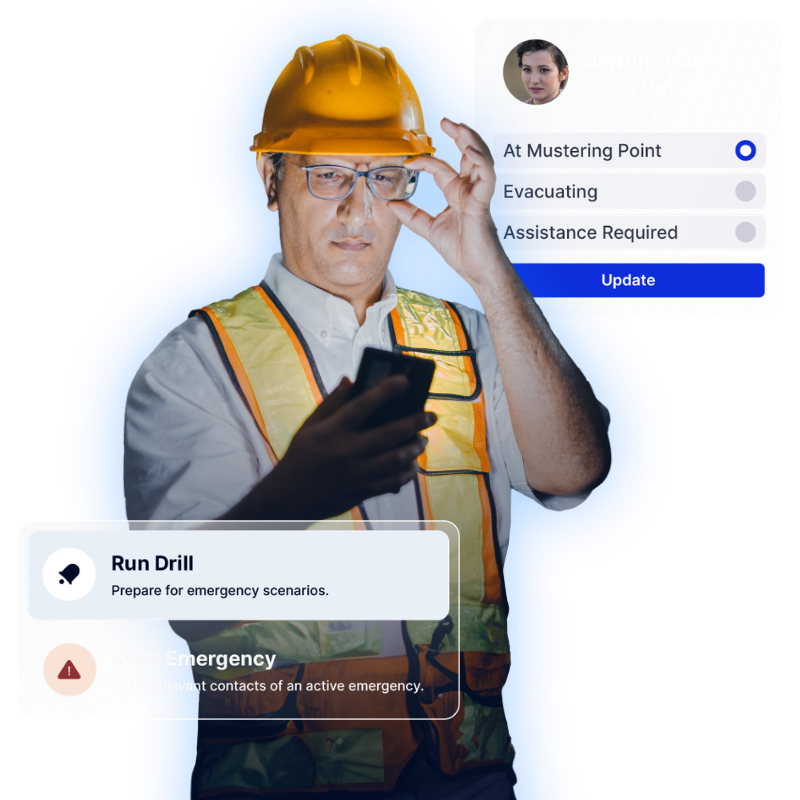
Real-time digital roll calls and building sweeps mean you always have a clear picture of who's on-site and who may need assistance, so your team can respond with confidence in any situation.
Customize Emergency Responses
Every workplace is different. EmergencyOS lets you build response profiles tailored to your environment and scenarios, including workplace violence, so your team always knows the plan.
Communicate in Real-Time
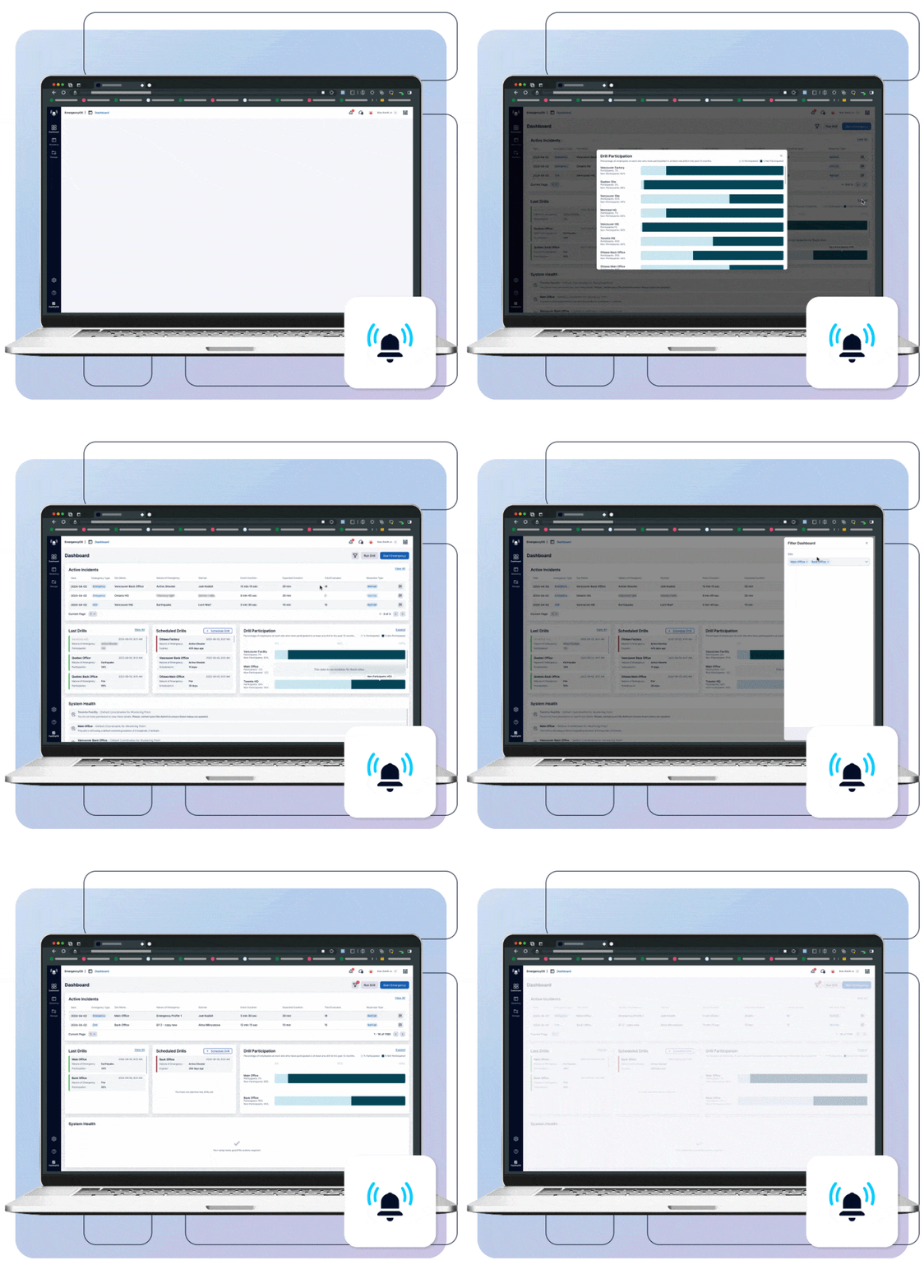
When something happens, getting the right information to the right people quickly makes all the difference. Customizable notifications keep everyone coordinated and moving in the same direction.
Maintain Flawless Records
Incident details, evacuee information, and response logs are captured and stored automatically, so your records are always complete and ready if you ever need them.
Harness Actionable Insights
Every incident is also a learning opportunity. EmergencyOS gives you the data to continuously strengthen your Workplace Violence Prevention Plan and show your team that safety is always improving.
Frequently Asked Questions
What is California Senate Bill 553 and who does it apply to?
SB 553 requires California employers to maintain a Workplace Violence Prevention Plan (WVPP) and provide employee training. The requirements apply to all California employers, with exceptions for workplaces with fewer than 10 employees, teleworkers, healthcare facilities, and law enforcement facilities. (Source: DLA Piper). If your organization operates any worksite in California where employees interact with others, there's a good chance it applies to you.
What does a Workplace Violence Prevention Plan actually need to include?
Your WVPP needs to identify who is responsible for implementing and maintaining the plan, describe how employees are involved in developing and reviewing it, define how you will identify and correct workplace violence hazards, and outline how incidents are reported and investigated. (Source: Compliancetraininggroup). Beyond the written plan itself, employers are also required to maintain a violent incident log and provide effective training to employees annually. (Source: Alliant)
What happens if my organization isn't compliant?
The good news is that getting compliant is very achievable with the right tools in place. That said, the stakes for inaction are real. Non-compliance may result in penalties up to $25,000 for serious violations and up to $158,727 for willful violations (source: DLA Piper), enforced by Cal/OSHA. Beyond the financial risk, having a well-documented plan in place is simply the right thing to do for your team's peace of mind and safety.
A Safer Workplace Starts Here
SB 553 is a chance to build something your employees will genuinely appreciate — a workplace where safety is thoughtful, documented, and real. EmergencyOS is here to help you make that happen.