2026 ASIS RESEARCH REPORT

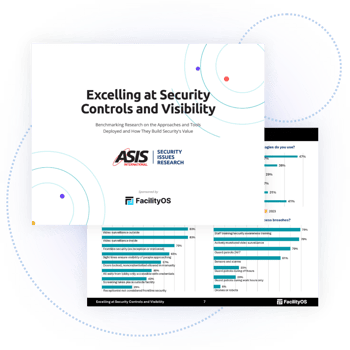
Excelling at Security Controls & Visibility

Benchmarking Research on the Approaches and Tools Deployed & How They Build Security's Value

In collaboration with:

asis_logo_notag
ASIS-2026SecurityReport-thumbnailpages

Insights from up to 1000 Security professionals

78% of Security Professionals Said Their Jobs Involved Compliance Issues

Security controls are the resources, processes, and technology deployed to protect physical and information assets, and visibility ensures security controls are properly protecting assets as intended. Together, they are a bedrock foundation of security practice.

In partnership with ASIS International Security Issues Research, up to 1000 security professionals were surveyed to capture the current status and practice of security controls and visibility.

ASIS fielded two surveys: One studying practices in place in corporate, educational, nonprofit, and governmental organizations, the other asking security consultants to assess the present state of controls and visibility. In some cases, results are compared to a similar survey conducted in 2023.
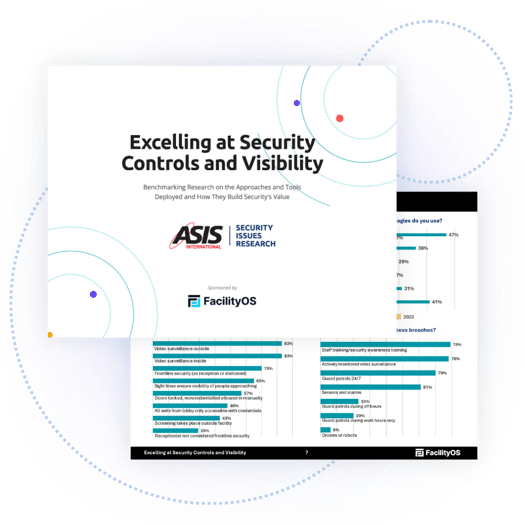
 

Preview What's Inside

ASIS-2026SecurityReport-thumbnail1


ASIS-2026SecurityReport-thumbnail1


ASIS-2026SecurityReport-thumbnail1


ASIS-2026SecurityReport-thumbnail1


utility-one-icon-navy Security Programs are Mature on Employees & Thin on Everyone Else
down-arrow

Nearly 3 in 4 security professionals want to improve how they manage visitors and contractors, more than any other area covered in the research. The report digs into why that gap persists even as digital tools become more common. And it looks at how manual logging and thin screening are quietly driving it.


utility-two-icon-navy Emergency Accountability Is Harder Than Most Assume
down-arrow

Only 43% of security professionals are confident they could get an accurate headcount during an emergency. The report breaks down what that confidence gap looks like across communication, evacuation, and mustering.


utility-three-icon-navy Common Security Controls Pitfalls
down-arrow

Tailgating and propped doors are the two most common security irritants, and most security professionals say both still need some improvement. The report breaks down all eight ways access controls get bypassed, from card sharing to staff deliberately working around security. And it shows how consultants rate the same eight areas, often more critically than security professionals rate themselves.


utility-four-icon-navy The State of In-Bound Material Security
down-arrow

More than a third of organizations have no system in place to vet high-value or hazardous inbound materials. The report looks at which methods, cameras, manual guarding, RFID, are actually catching on. And it shows why 71% of security professionals say this is an area that still needs work.


What the Data Tells Us

security-guard-badge-icon-line-1
55%
of security professionals say their organizations do a good job balancing employee convenience with security needs
returning-visitor-signin-icon-line
72%
say they would like to improve their capabilities in visitor management
notebook-document-compliance-icon
67%
of security consultants do not fully agree that organizations are effective at auditing and tracking compliance
Emergency-Access-Control-icon-line
43%
are confident in their organization's ability to get an accurate headcount of all people in a facility
ASIS-2026SecurityReport-thumbnail1

Frequently Asked Questions

Why do gaps appear in programs that already have strong policies?

Audits and near-misses tend to expose a gap between what a security program intends and what its systems can actually enforce. Documented policies are usually sound. The variation comes from manual processes and disconnected systems that produce different outcomes depending on site, shift, and staffing. 

How was the survey conducted?

In the second quarter of 2026, ASIS International convened a small group of ASIS members and a representative from project sponsor FacilityOS. This group put together a survey which was fielded in the month of May. The survey was promoted to ASIS members and customers via email, social channels, and ASIS newsletters. A total of 942 people answered at least some questions. All responses were recorded and used in this analysis regardless of whether the participant completed the survey. Security consultants and service providers were given the option to take an alternate set of questions. In total 637 people answered the last question available to them in the survey, which includes 131 consultant surveys and 506 standard surveys. 

Does strong security visibility actually improve outcomes?

Organizations that rate their own security controls and visibility as strong consistently report better outcomes, including fewer incidents and greater emergency readiness, than those that rate their controls as weaker, according to ASIS International's 2026 research.

What is the most common security control weakness organizations report?

Tailgating and propped doors rank as the two most common access-control pitfalls among security professionals, per 2026 ASIS International research.

How many organizations struggle with visitor management?

72% of security professionals say they want to improve their visitor management, according to 2026 research from ASIS International, sponsored by FacilityOS.

What percentage of security teams still track visitors on paper?

Close to a third of security professionals say they still manage visitors with pen, paper, a spreadsheet, or no tracking at all, per ASIS International's 2026 security controls research.

Can most security teams get an accurate headcount during an emergency?

Only 43% of security professionals say they'd be completely or mostly confident getting an accurate headcount during an emergency, according to 2026 ASIS International research.

Do organizations have a system to track high-value or hazardous inbound materials?

38% of organizations have no system in place to vet high-value, potentially dangerous, or otherwise important inbound materials, according to ASIS International's 2026 study sponsored by FacilityOS.