2026 RESEARCH REPORT

EHS at the Front Door:
Closing the Gaps in Visitor Safety, Compliance, & Visibility

In collaboration with:

EHSLeaderLogo
EHSLeadersReport-Thumb3

Insights from over 100 EHS professionals

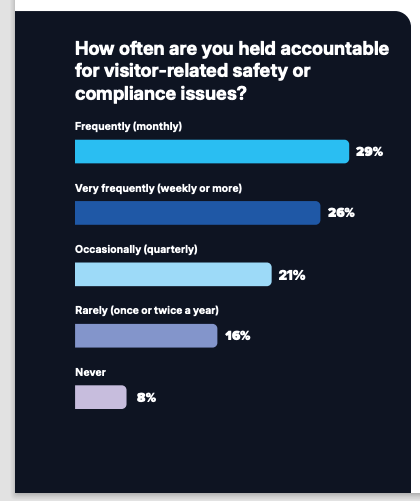
55% of EHS workers report they often are being held accountable for visitor related safety or compliance issues.

Visitor management has evolved well beyond a front desk function as it is increasingly tied to emergency preparedness, contractor oversight, audit-readiness, and organizational risk management. 

In collaboration with EHSLeaders, over 100 EHS professionals were surveyed to better understand how organizations manage non-employee safety, compliance, and visibility. 

Their insights show a growing need for more integrated, real-time visitor management systems and standardized processes that improve visibility, strengthen emergency readiness, and help organizations reduce risk more consistently across sites.


Preview What's Inside

EHSLeadersReport-Thumb2 (1)


EHSLeadersReport-Thumb2 (1)


EHSLeadersReport-Thumb2 (1)


EHSLeadersReport-Thumb2 (1)


utility-one-icon-navy EHS Professionals Are Owning More Risk
down-arrow

More than half of EHS professionals (55%) are held accountable for visitor-related safety or compliance issues at least monthly. The report digs into why that accountability keeps outpacing their actual authority. And it looks at the day-to-day manual work quietly driving that gap.


utility-two-icon-navy On Site Visibility Is The Biggest Gap Right Now
down-arrow

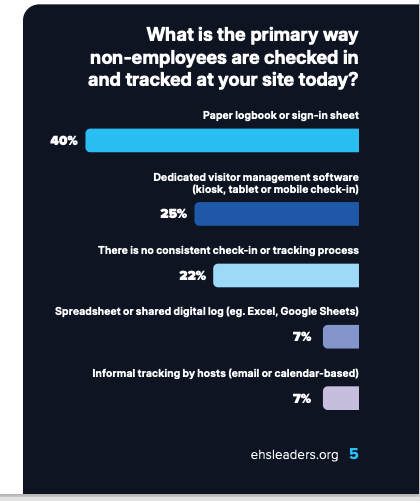
Most organizations think they know who's on-site. The report reveals that 40% still rely on a paper logbook to track it. The findings showcase how both processes and organizational barriers are significant contributors to achieving real-time on site visibility.


utility-three-icon-navy Challenges in Safety, Emergency Readiness & Accountability
down-arrow

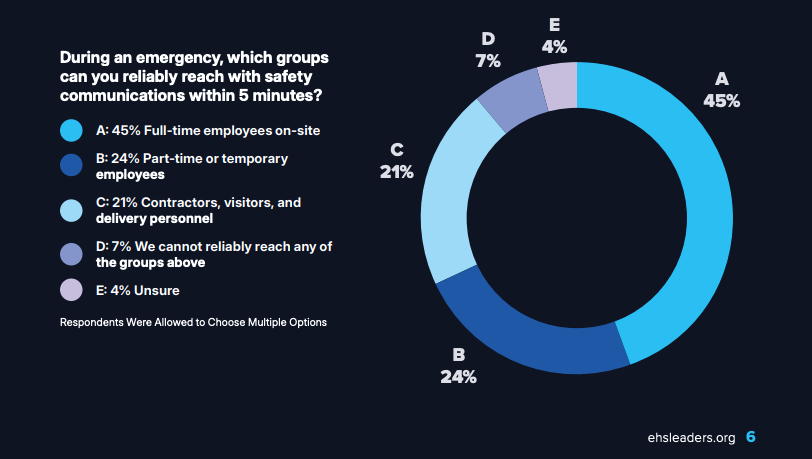
The results suggest many struggle to quickly confirm who is safely accounted for during high-pressure situations. Safety onboarding remains inconsistent and 64% of organizations depend on hosts to account for non-employees during an emergency. 


utility-four-icon-navy Visitor Management Gaps Also Increase Audit & Regulatory Risk
down-arrow

It creates real regulatory exposure, with more than one-third of respondents citing action tied to non-employees. The report breaks down how that risk connects back to the same root cause running through every other gap.


EHSLeadersReport-Thumb (1)

What the Data Tells Us

male-hardhat-persona
55%
of respondents report being held accountable for visitor-related safety or compliance issues at least monthly
paper-inbox-icon-line
40%
of facilities still rely on paper logbooks or sign-in sheets for their visitor management process
Emergency-Access-Control-icon-line
64%
say only hosts are responsible for accounting for their guests during an emergency
notebook-document-compliance-icon
45%
report experiencing safety incidents or compliance issues involving non-employees within the past 12 months.

Frequently Asked Questions

Why do gaps appear in programs that already have strong policies?

Audits and near-misses tend to expose a gap between what a safety program intends and what its systems can actually enforce. Documented policies are usually sound. The variation comes from manual processes and disconnected systems that produce different outcomes depending on site, shift, and staffing. The guide shows where that variation appears at each stage.

How was the survey conducted?

The “EHS at the Front Door” survey from FacilityOS and EHSLeaders was launched in March 2026 and gathered responses from 114 EHS professionals across various industries, including manufacturing, chemicals, construction, utilities, warehousing, transportation, and health services. All percentages in this report have been rounded to the nearest whole percent.

What's included beyond the analysis?

Each stage includes a self-diagnostic, a side-by-side comparison of manual versus systematic processes, and named case studies from facilities including Litehouse, Valmet, Ingersoll Rand, and SMTC Corporation. The guide closes with a gap score card you can use to map your own program across all four stages.