
Physical security is often discussed in terms of tools. Cameras, gates, badges, alarms. But effective physical security is not defined by individual controls. It is defined by how well those controls work together across the facility.
Most organizations protect their environments through three distinct but interconnected layers: the property boundary, the inside boundary, and the interior. Each level serves a different purpose, manages different risks, and requires different forms of oversight. When one layer is weak or disconnected, gaps appear that technology alone cannot fix.
As facilities expand, visitor volumes increase, and compliance requirements become more demanding, managing these three levels independently becomes harder to sustain. Manual processes, siloed systems, and static rules limit visibility and slow response times. Modern physical security strategies are moving away from isolated controls toward unified, data-driven approaches that treat security activity as a continuous operational signal.
Strengthening physical security today means understanding what each level is responsible for, how risks evolve as people and assets move through them, and how data and automation can reinforce consistency across all three. This guide breaks down the three levels of physical security, explains their role within a facility, and outlines how a connected approach helps organizations improve control, accountability, and resilience.
What are the 3 Levels of Physical Security?
Physical security is defined as the measures taken to protect property, assets, and buildings against intruders. FacilityOS increases security by combining the core functions of facility and visitor management into one integrated system, linking sign-in kiosks and an online dashboard. This enables a single user to manage various entrances and locations remotely.
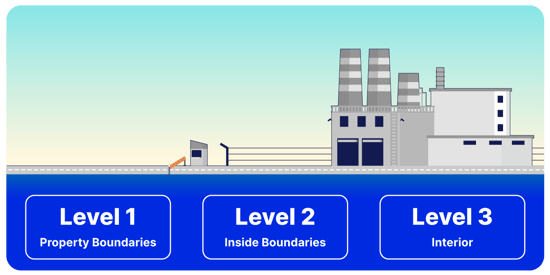
Integrating physical security software for a facility requires various levels of protection:
- Level 1- Property Boundaries
- Level 2- Inside Boundaries
- Level 3- Interior
An efficient physical security software implements at least two forms of security at every level.
Level 1 - Property Boundaries
Property boundaries are the first line of defense for physical security. When securing this perimeter, the aim is to control the bodies that drive or walk onto the grounds. Some security features in this level can include locked gates, secured by guards, or remotely operated. A hedge can offer ample perimeter security in a low-security facility, although options ramp up with security requirements.
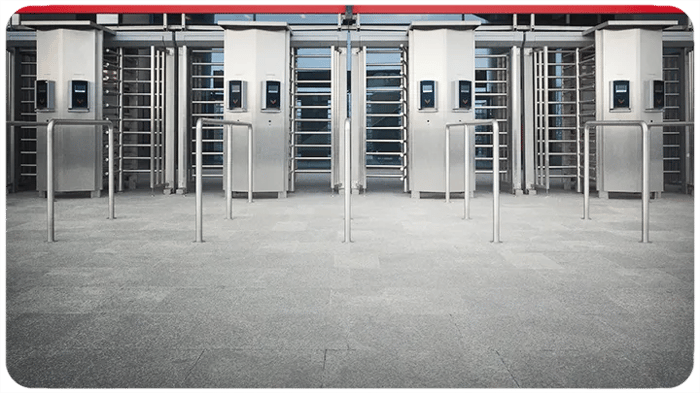
Clients need to determine the form of perimeter security to install by assessing the risks of encroachment onto the facility against the expenses of physical security measures. The outer perimeter will include access control integration. At the same time, FacilityOS integrates with new or existing access controls for gates, turnstiles, and doors to better control the people that make it on your premises. When combined with our Physical Identity & Access Management software, credential provision can be automated with policy-based workflows.
The facility management software enables security teams to monitor sign-ins constantly. The security teams can also admit or deny entry to sensitive locations remotely via the online visitor management dashboard.
Physical security is much more than access control integration and physical security software. It can also include natural access control, using landscaping and building features to direct people exiting and entering the property. In theory, a criminal's perceived risk when visiting your property is reduced if they believe they can move unnoticed.
Furthermore, it is integral to add territorial reinforcements as it helps distinguish public spaces from private spaces or property, preventing unauthorized entry. It is imperative to enable authorized personnel with a sense of authority. Authorized security personnel can detect visitors that seem out of place, as the environment makes it difficult for intruders to blend in.
Level 2 - Inside Boundaries
This level of physical security secures a facility’s walls, windows, and doors. Typically, alarm systems are used to protect this perimeter using a warning alarm if an exit or entry is breached. Nevertheless, it is pertinent to note that not every potential threat entering the facility will activate an alarm. The Inner Perimeter may require security such as access control integration, keys, locks, key controls, and electronic visitor management software.
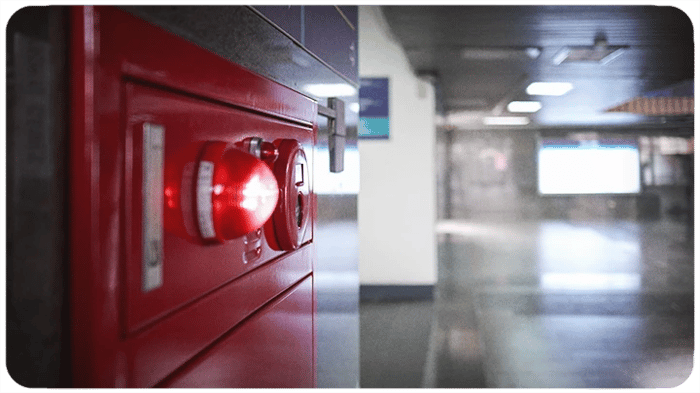
All of these measures play a role in ensuring unauthorized personnel are kept out of the building. These components also ensure that the flow of visitors to the building is controlled. To achieve this, facility management software leverages watchlists, monitoring visitors via sign-in kiosks. These sign-in kiosks are integrated with custom and government watchlists. The visitor management software screens visitors against pre-set watchlists to identify potential threats. The implemented physical security software automatically notifies security when potential threats are identified while denying entry to said individuals.
Level 3 - Interior
This third level makes up the levels of physical security. By definition, interior security addresses the facility's interior, where data stores, employee offices, and other pertinent assets are housed. Motion detectors and security cameras can be quite effective at monitoring the interior space of any building.
These components are further bolstered by electronic access control systems—with ID scanning and document collection features—all of which control traffic flow within a building and stop unauthorized persons at the door.
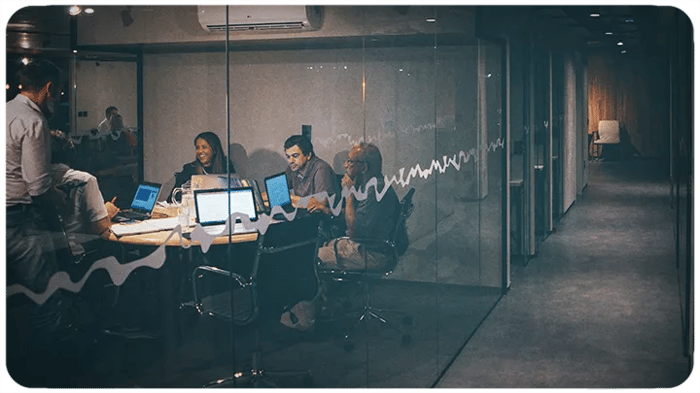
A visitor management system is placed, preferably in a central lobby, scans Identification, saves identification information, and records visit times on each person requesting access to the building. Furthermore, automation allows for instant background checks on visitors, alerting security and creating logs of attempted check-ins and denials.
The future of Physical Security is AI-Driven & Data-Centric
As facilities grow more complex and regulatory expectations continue to rise, physical security is shifting from a reactive function to a data-informed discipline. The next competitive advantage is no longer defined by how many systems are deployed, but by how effectively data and AI are used to connect people, processes, and risk across the organization.
Traditional physical security models rely heavily on static infrastructure and manual oversight. These approaches struggle to scale as organizations add locations, contractors, delivery volume, and compliance requirements. In contrast, modern security strategies are becoming software-defined, built around continuous data capture, real-time visibility, and automated decision-making across all three levels of protection: property boundaries, inside boundaries, and interior spaces.
From Hardware-Centric Security to Software-Defined Intelligence
Modern physical security ecosystems prioritize data as the foundation. Every check-in, access event, delivery, and alert becomes a signal that contributes to a broader understanding of operational risk.
Data-centric security platforms enable organizations to:
-
Centralize real-time visibility of people, packages, and assets across locations
-
Standardize workflows to enforce consistent policies at scale
-
Replace manual approvals with policy-based automation
-
Maintain defensible, audit-ready records across regulatory frameworks
Rather than operating as isolated systems, visitor management, contractor access, emergency response, logistics, and security operations increasingly function as interconnected layers within a single operational model.
Why AI Matters in Physical Security Operations
AI does not replace security teams. It augments them by helping surface patterns and risks that are difficult to detect manually, especially across large or distributed environments.
In data-rich physical security environments, AI enables:
-
Data-driven risk signals: Identifying unusual access patterns, repeated denials, bottlenecks, or anomalies across sites
-
Policy automation: Enforcing rules dynamically based on role, location, time, training status, or compliance requirements
-
Context-aware access: Adjusting permissions in response to changing conditions, such as elevated risk levels or active incidents
-
Unified audit trails: Creating complete, searchable records that support investigations, audits, and regulatory reviews
These capabilities allow security teams to shift from monitoring activity to actively managing risk.
Enterprise Security, Privacy, and Compliance by Design
For regulated and security-sensitive environments, a data-centric approach must be paired with strong governance. AI-driven physical security only works when data is secure, controlled, and compliant.
Modern integrated software platforms are designed with:
-
Role-based permissions and access controls
-
Configurable data retention policies aligned with regional and industry regulations
-
Detailed logging to support internal controls and external audits
-
Secure, scalable cloud architectures built for resilience and performance
This ensures that increased visibility does not come at the expense of privacy or compliance.
Turning Physical Security Into a Strategic Data Layer
Physical security now is a source of operational intelligence that informs risk posture, compliance readiness, and business continuity.
Organizations that digitize and unify physical security data can:
-
Reduce manual, paper-based processes and administrative overhead
-
Improve emergency readiness through real-time mustering and roll calls
-
Apply consistent security policies across sites and regions
-
Balance tighter controls with better visitor and contractor experiences
Software platforms like FacilityOS reflect this shift by bringing together security, safety, and operations data into a unified, AI-ready foundation. The value is not in the software itself, but in the ability to turn physical security activity into actionable insight.

Stay updated with industry insights, success stories, and more. Follow us on social media for the latest FacilityOS content.
 Follow us on Facebook
  Follow us on X
 Follow us on LinkedIn