
The facility gate and the front desk are where cargo security gets enforced in practice. Drivers, contractors, and business partners all enter the supply chain there, and how a site identifies, vets, and logs them is part of the security profile that U.S. Customs and Border Protection (CBP) reviews under the Customs-Trade Partnership Against Terrorism (CTPAT) program. When that process runs on paper, gaps appear: incomplete logbook entries, unverified IDs, and records that are slow to produce during an audit.
This page covers what CTPAT expects from a visitor management process, the limits of running it on paper, and how a visitor management system produces a record that holds up under review. It then looks at how FacilityOS's visitor management solution, VisitorOS, maps to specific CTPAT requirements for both office visitors and cargo drivers.
What Is CTPAT?
CTPAT is a voluntary public-private partnership between CBP and businesses in the international supply chain, including importers, carriers, consolidators, licensed customs brokers, and manufacturers. C-TPAT members agree to adopt CBP's minimum security criteria across their supply chains in exchange for benefits such as fewer cargo examinations and shorter wait times at the border.
The inspection-time benefit is the one most often cited, but it is not the only reason membership matters. CTPAT certification signals to customers, partners, and regulators that a company runs a documented, repeatable security program.
That reputation carries weight in vendor selection and in supply chain audits, where buyers increasingly expect their partners to be validated members of CTPAT.
Where Visitor Management Fits in CTPAT
Under CTPAT's Minimum Security Criteria, members of CTPAT must maintain a documented process to vet non-company personnel on the premises. This applies to office visitors and to drivers responsible for picking up or delivering cargo. The visitor management process flow is one of the standard operating procedures that CBP expects to see documented in a CTPAT member's Security Profile, and it is also one of the procedures that most often gets overlooked.
The reason it matters: an unvetted visitor or an unverified driver is a direct path to the cargo and the facility.
A visitor process that confirms identity, records the visit, and controls access is how a site demonstrates that it knows who was on premises, when, and why.
What CTPAT Expects From a Visitor Management Process
The requirements differ for general visitors and for drivers moving cargo. Both should be written into the Security Profile and shared with business partners and vendors.
Office and General Visitors
The baseline CTPAT visitor flow follows a consistent pattern:
- Non-employees wait in a lobby, vestibule, or outside until an employee meets them and determines the nature of the visit. They do not enter the facility directly.
- An employee reviews a government or company-issued ID to verify identity and credentials.
- The visitor signs a logbook with full name, date, host, and time of visit, then receives a visitor badge. The employee who vetted the visitor also signs or initials the log to confirm the vetting happened.
- The visitor displays the badge visibly and stays accompanied by a vetted employee for the duration of the visit.
- At departure, the visitor returns the badge and signs out with the time of exit.
Producing documentation during an audit typically means locating physical records across multiple systems, reconstructing sign-in entries, and verifying that nothing was misfiled. For multi-site operations, that process is difficult to complete consistently.
Technology makes this repeatable. Instead of a paper logbook, a digital visitor management system captures each required field at check-in, so entries stay complete and legible.
Visitor management systems, like FacilityOS’s VisitorOS, also support pre-registration, pre-screening, and pre-approval, which move the ID check and watchlist screening ahead of the visit. An expected guest can be vetted and cleared before arriving, so the on-site step is confirming identity and handing over the badge rather than starting the paperwork.
Drivers Picking Up or Delivering Cargo
Drivers follow the same sign-in and ID checks as other visitors, with added steps because the identity of the driver, equipment, and company has to be fully confirmed before any cargo is accepted or released. Beyond name, date, and arrival and departure times, the vetted employee records:
- Employer or company name
- Truck number
- Trailer number
- Seal number, when a seal is affixed to the shipment
These details tie a specific driver and vehicle to a specific shipment, which is the chain-of-custody record CTPAT regulators look for.
Technology captures these details without holding up the dock. With a system like VisitorOS, a driver scans a QR code at the gate or dock and completes a touchless sign-in from the cab, capturing their license and entering the truck, trailer, and PO numbers without leaving the vehicle. Recording it the same way on every trip keeps the driver, vehicle, and shipment tied together in one entry.
Related Content: Top Benefits of a Visitor Management System for Logistics & Delivery Drivers

Manual Logbooks vs. a Visitor Management System
A paper logbook can technically satisfy the criteria, but the method changes how reliable the record is. The difference between the two shows up field by field, and most clearly when an auditor asks for a specific visit.
| What CTPAT expects | Paper logbook | Visitor management system |
|---|---|---|
| Complete, legible records | Relies on each employee to fill every field by hand; skipped fields and illegible entries are common | Required fields are enforced at check-in, so entries stay complete every time |
| Identity verification | ID is eyeballed at the desk with no proof the check happened | ID and passport scans are captured and logged to the visit |
| Watchlist screening | A separate manual lookup, if it happens at all | Runs automatically during check-in, before entry is granted |
| Visitor identification | Handwritten or generic badges with no photo | Printed photo badges, color-coded by reason for the visit |
| Driver and cargo detail | Truck, trailer, and seal numbers depend on memory and handwriting | Captured at sign-in and tied to the shipment record |
| Audit retrieval | Visits are searched by hand through binders | Records are retrievable by visitor or date in seconds |
| Consistency across shifts | Varies with whoever is staffing reception | The same workflow runs for every visitor and every shift |
Each capability in the right column is a control a site can show during a review, not just a policy on file. The section below maps those capabilities to specific CTPAT requirements, using VisitorOS as the example.
How VisitorOS Supports CTPAT Compliance
VisitorOS is the FacilityOS visitor management module. It maps to the CTPAT visitor and cargo requirements by standardizing the process, enforcing each step in the workflow, and producing a digital record that is ready when a regulator asks. Each capability below addresses a specific part of the CTPAT visitor flow.
Pre-Registration and Flexible Check-In

VisitorOS runs check-in at a self-service kiosk on arrival or ahead of time from a visitor's mobile device via pre-registration. Hosts can pre-register expected guests so identity capture, watchlist screening, and approval happen before arrival, and contractors and drivers can complete the same steps from their phone. Either path captures the same required fields, so the visit is logged consistently whether it starts at the front desk or before the visitor reaches the site.
Identity Verification
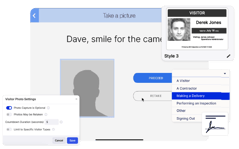
VisitorOS verifies visitor identity through digital ID and passport scanning, which replaces the manual ID review at the desk with a captured, logged check. This addresses the CTPAT step of confirming identity and credentials before a visitor proceeds.
Watchlist Screening
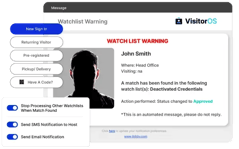
Visitors and contractors are screened against watchlists or deny lists, so unauthorized individuals can be denied access before entry. Screening runs automatically as part of check-in rather than as a separate manual lookup.
Learn more about watchlists and visitor management systems here.
Access Control and Photo Badges

VisitorOS controls who gets physical access to points of entry and issues printed photo badges that visually identify guests. Badges can be color-coded by reason for the visit, which supports the CTPAT expectation that visitors are visibly identified while on-site.
VisitorOS also integrates with existing access control systems, so a cleared visit can grant or restrict door access automatically. For sites that prefer a native option, FacilityOS offers SecurityOS, its physical identity and access management (PIAM) module.
Digital Document Management

NDAs, waivers, and safety guidelines are signed digitally and stored securely against each visitor record. Drivers can review and sign trailer codes of conduct and safety protocols on a mobile device, which keeps required acknowledgments attached to the visit instead of in a paper file.
Audit Trail and Automated Reports
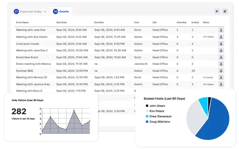
VisitorOS keeps a comprehensive digital log of who was on-site, when, and for how long, with active monitoring through real-time notifications and a dashboard. Automated reports, such as an end-of-day report of who remains signed in, replace the manual counting and reconciliation that paper logs require. When a regulator requests proof, records are retrievable by visitor or date.
Data Protection

Personally identifiable information stays within the FacilityOS environment, kiosks are tamper-proof and enrolled in mobile device management for remote wipe, and the platform undergoes regular security audits like SOC2 and ISO 27001. This supports the data security expectations that come with handling visitor and driver information at scale.
Driver Check-In: The C-TPAT Cargo Use Case
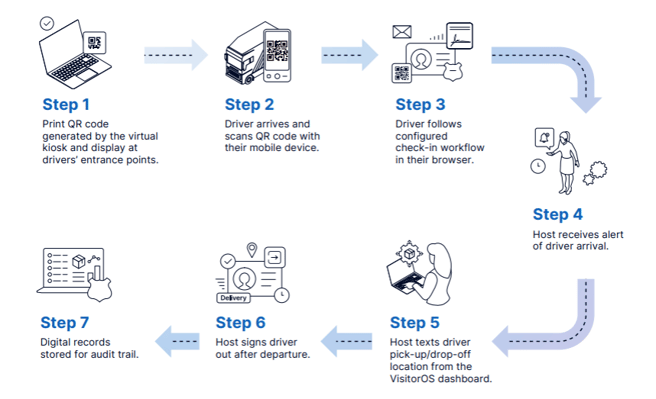
The cargo pickup and delivery flow is where visitor management and CTPAT overlap most directly. VisitorOS handles driver check-in without requiring the driver to leave the truck. A driver scans a QR code at the gate or dock, enters their driver's license and the shipment details CTPAT requires (such as PO number, truck number, and trailer number), and signs any required compliance documents from their mobile device.
When the driver completes sign-in, transport clerks and hosts are notified in real time, and the system prompts staff to sign the driver out at departure so the record stays complete. The result is a digital chain-of-custody log that captures the driver, vehicle, and shipment details auditors expect, without the misheard buzzer details and incomplete paper logs that manual check-in produces.
Success Story: CTPAT Audit Readiness in Freight and Logistics
A leading third-party logistics provider eliminated manual tracking of carrier credentials and dock access with FacilityOS. The reported outcomes connect directly to CTPAT review:[Source: FacilityOS]
- Audit prep dropped from weeks to days for DOT and CTPAT audits.
- Non-compliance was automatically flagged and blocked at check-in for carriers lacking current insurance or hazmat training.
- Dock access was centralized across 12 facilities, including distribution centers, cross-docks, and freight terminals.
More broadly, FacilityOS reports a 90% reduction in time to process carriers, drivers, and freight handlers at check-in, with reports for DOT audits, CTPAT reviews, and customer security audits generated in seconds.
"FacilityOS gave us complete visibility into who has access to our loading docks and whether they're qualified. We've cut audit prep time drastically and eliminated surprise delays when carriers arrive."
- VP of Operations, Regional Freight & Logistics Provider
Who Benefits
Security Managers
Security managers gain a controlled front door, since access stays gated until identity verification, watchlist screening, and badging are complete. The entry record stays consistent across shifts and reception staff, which is what makes the CTPAT visitor process defensible.
Compliance and Quality Teams
Compliance teams can produce the documented visitor and driver records CTPAT requires without reconstructing them from paper. The Visitor Management Process Flow is enforced by the system, so what is written in the Security Profile matches what actually happens at the door.
Facilities/Operations Managers
Facilities and operations managers get faster check-ins for drivers and carriers without sacrificing the record. Dock turnaround improves because credential and identity checks run digitally, and the same workflow scales across multiple sites.
Frequently Asked Questions
What does CTPAT require for visitor management?
CTPAT members must maintain a documented process to vet non-company personnel on-site, including office visitors and cargo drivers. The process should restrict direct entry, verify a government or company-issued ID, log the visit with full name, date, host, and times, issue a visitor badge, and record sign-out. For drivers, it should also confirm the identity of the driver, vehicle, and company, and capture employer name, truck number, trailer number, and seal number. This Visitor Management Process Flow should be included in the CTPAT member's Security Profile.
Does CTPAT require a digital visitor management system?
No. C-TPAT specifies what the visitor process must capture, not which tool you use, and a paper logbook can meet the minimum criteria. A digital visitor management system helps by enforcing the required fields, scanning IDs, screening against watchlists, and making records searchable, which reduces the gaps that cause findings during a review.
How does a visitor management system help with CTPAT audits?
It keeps a complete digital log of who was on-site, when, and why, with each step logged automatically. During an audit, records are retrievable by visitor or date instead of counted by hand from a binder. One third-party logistics provider reduced audit prep from weeks to days for DOT and CTPAT audits after replacing manual tracking with FacilityOS.
How does VisitorOS handle CTPAT cargo driver check-in?
Drivers scan a QR code at the gate or dock and complete check-in from the truck. They capture their driver's license, enter shipment details such as PO, truck, and trailer numbers, and sign required compliance documents on their mobile device. Staff are notified in real time and prompted to sign the driver out, so the driver, vehicle, and shipment are tied together in one record.
What is Identity Validation in VisitorOS?
Identity Validation is a capability expected in June or July 2026 that verifies a driver's identity and matches it against the expected shipment. Combined with the existing driver check-in feature and visitor screening through the CheckrTrust integration, it helps CTPAT members confirm both the driver and the load in high-security environments.
Sources
- CBP, Customs-Trade Partnership Against Terrorism
- Veroot, The Total Guide to CTPAT Visitor Management Protocol
- FacilityOS, CTPAT Compliant Visitor Log System
- FacilityOS, Truck Driver Check-In and Dock Scheduling
- FacilityOS, Facility Management for Freight & Logistics
This page provides general guidance on CTPAT and visitor management and is not legal advice. Confirm your specific requirements with your compliance and legal teams and against CBP's current Minimum Security Criteria.
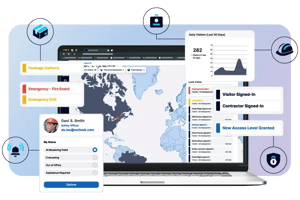 Streamline Your Visitor Program
Streamline and automate your visitor management operations to achieve ITAR regulatory compliance, enforce safety protocols, and drive site security requirements.